Driving in Turkey: car rental, licence, toll roads and fines
By Gezdir.me editorial team ·

You can rent a car in Turkey at the airport or in town on the driving licence of your own country: Turkish rules let a foreigner drive on it for up to six months from the date of entry. The main thing to sort out before the trip is how toll motorways and bridges are paid: there is no cash payment, everything is charged through the electronic HGS system. A car pays off on the coast, in Cappadocia and on the Black Sea, where the sights lie far apart. In Istanbul itself the metro, tram and ferry are the easier way to get around, and the car is best picked up on the day you leave the city.
Where to rent a car and what the contract decides
The simplest option is to collect the car straight after landing. According to its website, Istanbul Airport has 22 rental companies working around the clock, with desks in the public area of the domestic arrivals hall. Regional airports have rental desks too, for example the gateways to Cappadocia and Trabzon. We do not name or compare companies: there is no official ranking of rental firms.
What a rental costs in Istanbul or Antalya cannot be given as one figure. There is no regulated tariff: each company sets its own price, and it changes with the season, the car class, the gearbox, the insurance and the length of hire. So compare not the daily price in the shop window but the total under the contract: what the insurance covers and how high the excess is, how much is blocked as a deposit and by what method, whether there is a mileage limit, and on what terms the car can be returned in another city. The minimum age and driving experience are also set by the company, not by law.
A short routine helps when you collect the car:
- photograph the body, wheels and interior together with the damage marks on the handover form;
- check the fuel level against what the contract says, and ask what level the car must be returned with;
- make sure there is an HGS label on the windscreen: without it every toll section becomes a violation passage;
- find out how the company passes on camera fines that arrive for the rental period: the contract decides this, not the law.
Foreign licence: six months from the date of entry
The rule is in Article 88 of Turkey's Highway Traffic Regulation (Karayolları Trafik Yönetmeliği), as amended in the Resmî Gazete of 5 June 2020. A foreigner may drive on a licence issued abroad for no longer than six months from entering the country; after that it has to be exchanged for a Turkish one. The same rule is repeated in an information note from the General Directorate of Security of the Turkish Interior Ministry dated July 2026 and published by the Turkish embassy. The period runs from entry, so the date in your passport or in the border-crossing record is the starting point. The licence category must match the vehicle.
Do you need an international driving permit? The point of Article 88 on foreigners' licences mentions neither an international driving permit nor a translation: the requirement to carry a certified translation applies to Turkish citizens with foreign licences. As of 7 November 2026 we found no official Turkish source dealing specifically with licences issued in Cyrillic only. A rental company may require an international permit under its own terms, so read them before booking and, if in doubt, get one at home.
Toll roads, HGS and the Bosphorus bridges
Turkish toll motorways (otoyol) and the large bridges have no cashier to take money. The toll is charged automatically from an HGS label, a sticker on the windscreen linked to the vehicle's account. It is issued by the postal service PTT, and you can top up the account and check passages on the official HGS website. In a rental car the label is linked to the company's account, and how the company charges you for passages is set out in the contract.
If the car passes without a label or with an empty balance, this is a "violation passage" (ihlalli geçiş). Under the rules of the General Directorate of Highways (KGM), you have 15 days from the date of passage to pay without a penalty. The operator of the Eurasia Tunnel describes the next steps on its tariff page: if you pay on day 16–45, a penalty equal to one toll is added, and later the penalty is four times the toll. For those who entered in their own car with foreign plates, KGM offers payment through the "Yabancı Plakalı Araç Ödemeleri" section of the tax office website ivd.gib.gov.tr; an unpaid debt will stop you leaving through a customs checkpoint.
KGM's tariffs show what it costs to cross the Bosphorus in a car (class 1):
- the 15 July Martyrs Bridge (formerly the Bosphorus Bridge) and the Fatih Sultan Mehmet Bridge: 59 TL per crossing each from 1 January 2026; since 2022 the toll has been charged in both directions (KGM tariff);
- the Yavuz Sultan Selim Bridge in the north of the city: 110 TL from 1 July 2026, also in both directions (KGM tariff);
- the Eurasia Tunnel under the strait: a private operator, payment only through HGS or on its website, no cash or bank cards accepted at the entrance; the current tariff could not be read on the operator's page on 7 November 2026.
If your route runs from Istanbul to the Aegean coast via the Dardanelles, allow for the 1915 Çanakkale Bridge: for a car it costs 1,170 TL from 1 July 2026 (KGM tariff). The toll on the motorways themselves depends on the section and is given in separate KGM tariffs for each road.

How much fuel costs
Fuel prices in Turkey are not fixed by the state: distribution companies announce them, and the market is regulated by the energy authority EPDK. As an example, here are the prices per litre including VAT of one of the large distributors, Petrol Ofisi, on 7 November 2026:
- Istanbul, European side: 95-octane petrol at 74.60 TL, diesel at 95.20 TL, autogas (LPG) at 50.70 TL;
- Antalya: 95-octane petrol at 76.80 TL, diesel at 97.60 TL, autogas at 50.90 TL.
Another large chain, Opet, states plainly on its price page that the announced figures are recommended prices and that an individual station may set its own. Prices change, so go by the board at the station where you are filling up.
Speed limits and fines
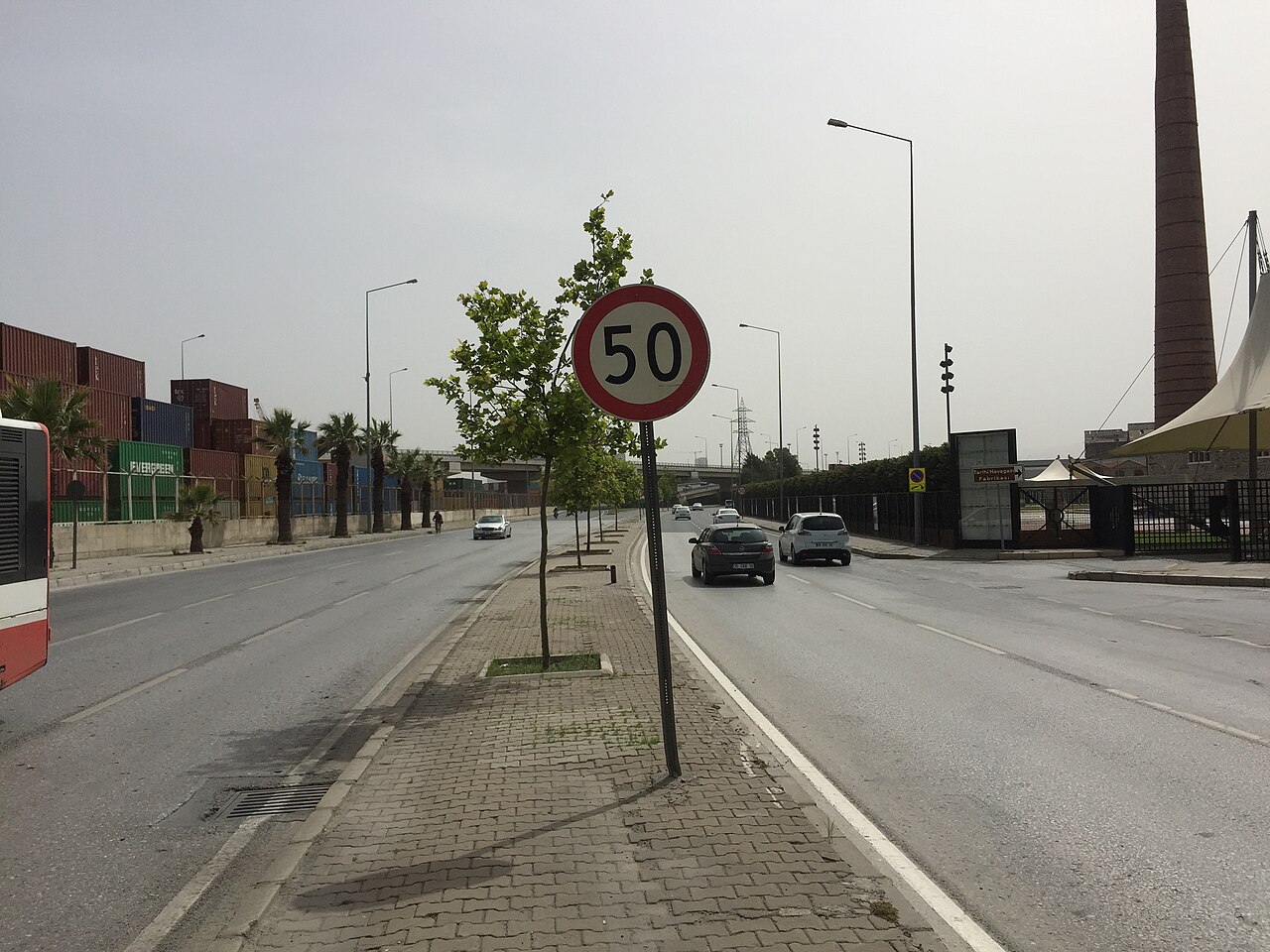
For a car, the KGM table sets these limits: 50 km/h in a built-up area, 90 km/h on a two-way intercity road, 110 km/h on a dual carriageway, 130 km/h on KGM toll motorways and 140 km/h on motorways built under the build-operate-transfer scheme (YİD). The higher motorway limits apply under an Interior Ministry letter of 2 June 2022. If a sign shows a different limit, the sign applies.
Since 27 February 2026, speeding fines have been calculated not in percentages but in kilometres per hour over the limit: this is how Law No. 7574 rewrote Article 51 of Highway Traffic Law No. 2918 (Resmî Gazete). The first figure in brackets is the excess in a built-up area, the second outside it:
- 2,000 TL (6–10 / 11–15 km/h);
- 4,000 TL (11–15 / 16–20 km/h);
- 6,000 TL (16–20 / 21–25 km/h);
- 8,000 TL (21–25 / 26–30 km/h);
- 12,000 TL (26–35 / 31–40 km/h);
- 15,000 TL (36–45 / 41–50 km/h);
- 20,000 TL and a 30-day licence suspension (46–55 / 51–60 km/h);
- 25,000 TL and a 60-day licence suspension (56–65 / 61–70 km/h);
- 30,000 TL and a 90-day licence suspension (66+ / 71+ km/h).
The suspension is imposed for every such offence, and the licence is returned only after all related fines are paid. The amounts are written into the law itself and are in force as of 7 November 2026.
Driving in Istanbul: traffic jams and parking
Whether to take a car in Istanbul comes down to the traffic. According to the TomTom Traffic Index for 2025, average congestion in the city was 62%, and 10 km took on average 22 minutes 54 seconds, almost a minute longer than a year earlier. The metro, Marmaray, trams and ferries run on their own tracks and routes, stay out of these jams and link all the main districts of Istanbul; how to use and pay for them is covered in our article on the Istanbulkart. On top of that, driving between the two shores means paying for a bridge or tunnel.
The main operator of paid parking is the municipal company İSPARK: it runs on-street parking as well as separate open-air and multi-storey car parks. The tariff depends on the district and the length of stay. The official İSPARK website did not open on 7 November 2026, and press accounts of the 2026 tariff differ by district, so we give no figures. Historic districts such as Sultanahmet have many narrow and pedestrian streets; if you book a hotel there, ask in advance where you can leave the car.

Routes worth renting a car for
No one officially measures how scenic a route is, so below are the directions where a car saves the most time: the places of interest lie far apart, and public transport to them runs rarely or with changes. We do not give journey times: they depend on the season and the road and are best checked in a navigation app on the day of the trip.
- The Mediterranean coast: from Antalya west to the cable car up Mount Tahtalı, then along the coastal road between Kaş and Kalkan to Fethiye, Saklıkent Gorge and Ölüdeniz. East of Antalya lie Perge and Aspendos.
- The Aegean: Ephesus and the village of Şirince not far from İzmir, then inland to Hierapolis at Pamukkale, Aphrodisias and Lake Salda.
- Cappadocia: from Uçhisar to the underground city of Derinkuyu and on to the Ihlara Valley.
- The Black Sea coast: from Sumela Monastery to Lake Uzungöl and the Ayder Plateau; the roads and season of this region are covered in our article on Turkey's Black Sea coast.
FAQ
What other fines do drivers get most often?
Under Law No. 7574, using a phone while driving costs 5,000 TL, and a repeat offence within a year 10,000 TL; from the third time the amount rises again and a 30-day licence suspension is added. An unfastened seat belt on the driver or a passenger costs 2,500 TL, and a child under 15 without the required restraint 5,000 TL for the driver.
Can I leave Turkey without paying a fine?
You can leave, but the debt does not disappear. Since February 2026, Article 115 of Law No. 2918 provides that a foreigner's fines not paid before departure are collected on their next entry; if they cannot be paid, entry is refused.
Who do I call after an accident?
The single emergency number in Turkey is 112. If the car is rented, report what happened to the rental company straight after that, using the phone number in the contract: the company sets its own procedure for recording an accident and an insurance claim.
Sources
- Resmî Gazete, 5 June 2020: amendments to Article 88 of the Highway Traffic Regulation (foreign licences)
- Embassy of Turkey in Prague: Turkish Interior Ministry note on licences and fines, July 2026
- Resmî Gazete, 27 February 2026: Law No. 7574 amending the Highway Traffic Law
- KGM: speed limits
- KGM: vehicles with foreign plates and 15 days to pay
- KGM: tariff of the 15 July and Fatih Sultan Mehmet bridges, 2026
- KGM: tariff of the Yavuz Sultan Selim Bridge, from 1 July 2026
- KGM: tariff of the 1915 Çanakkale Bridge, from 1 July 2026
- Eurasia Tunnel: payment and penalties for unpaid passages
- PTT: official HGS website
- Petrol Ofisi: fuel prices by province
- Opet: fuel prices
- Istanbul Airport: car rental
- TomTom Traffic Index: Istanbul, 2025
Photo: Alexander van Loon · CC BY-SA 2.0 (https://commons.wikimedia.org/wiki/File:Kaputa%C5%9F_Plaj%C4%B1_(with_X100S).jpg)