How to Get Online in Turkey: Wi-Fi, SIM Cards and eSIM — The Complete Guide for Tourists
By Мақсат Қыпшақ ·
The plane touches down softly, your phone comes out of airplane mode — and you immediately realise that without internet you're helpless. You need to let your family know you've landed. Check whether the transfer driver has changed the pickup time. Open a map to figure out where you even are. Call a taxi or work out how to get to your hotel. It all comes down to one question every tourist faces in their first minutes in Istanbul: how do you get online right after landing without overpaying? There are exactly three ways: free Wi-Fi at the airport, a local SIM card and an eSIM. Each has its own logic, its own advantages and its own pitfalls. Let's go through them one by one, so that by the end of this article you know exactly which one suits you. Important: all prices in this article are current at the time of writing (2026). Operator and eSIM service rates change often, so always confirm the final amount on the spot or on the official website before paying.
Free Wi-Fi at Istanbul's Airports
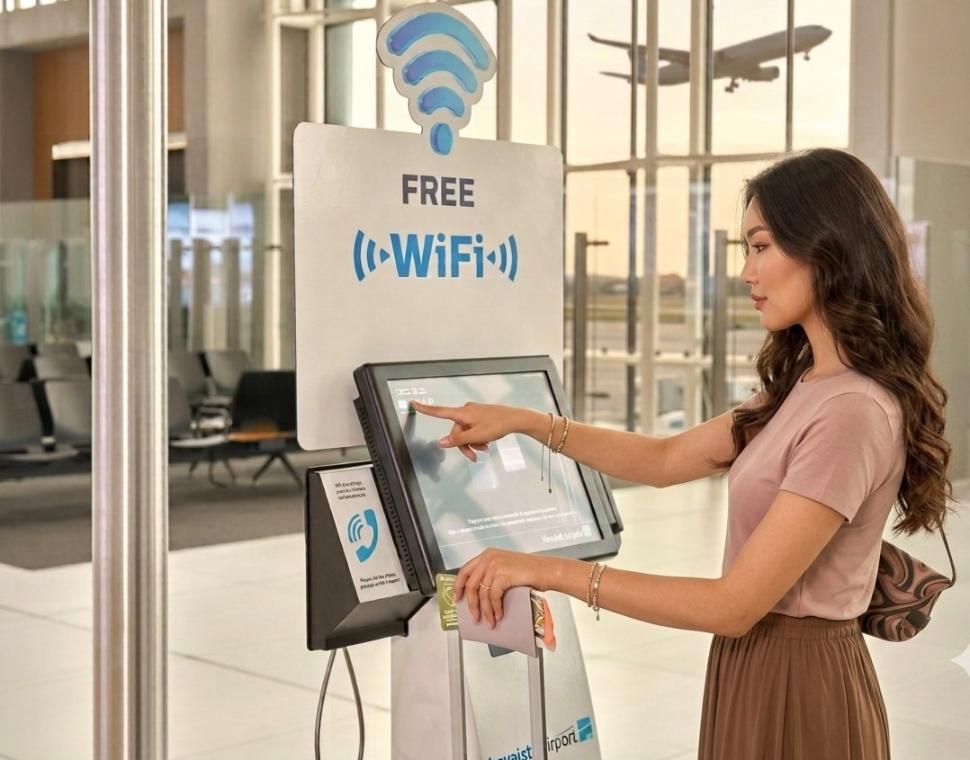
Both Istanbul Airport (IST) and Sabiha Gökçen (SAW) have free Wi-Fi — and it's the first thing to connect to as soon as you step off the plane. It works the same way across Turkey: free access is time-limited, and you need to register once to log in. You usually get about an hour of free internet — enough to message your loved ones, open a map, contact your driver and activate an eSIM you bought in advance.
Istanbul Airport (IST) — Step by Step
1. In your phone's settings, choose the network with a name like IST Free WiFi. 2. A registration page will open (if it doesn't open by itself, go to any website in your browser). 3. The system will ask for your phone number, and an SMS with a code will be sent to it. This is the main catch: if your home SIM doesn't receive SMS while roaming, the code won't arrive. 4. For this situation, there are special Wi-Fi kiosks in the arrivals area: you hold your passport up to the scanner, and the machine gives you an access code with no SMS needed. 5. Enter the code — and you're online.
Sabiha Gökçen Airport (SAW) — Step by Step
The logic is the same: you connect to the airport network, register via SMS or at a passport kiosk, and get free access for a limited time. SAW is smaller, with fewer access points and kiosks, but the principle is identical.
Tourist SIM Cards in Turkey
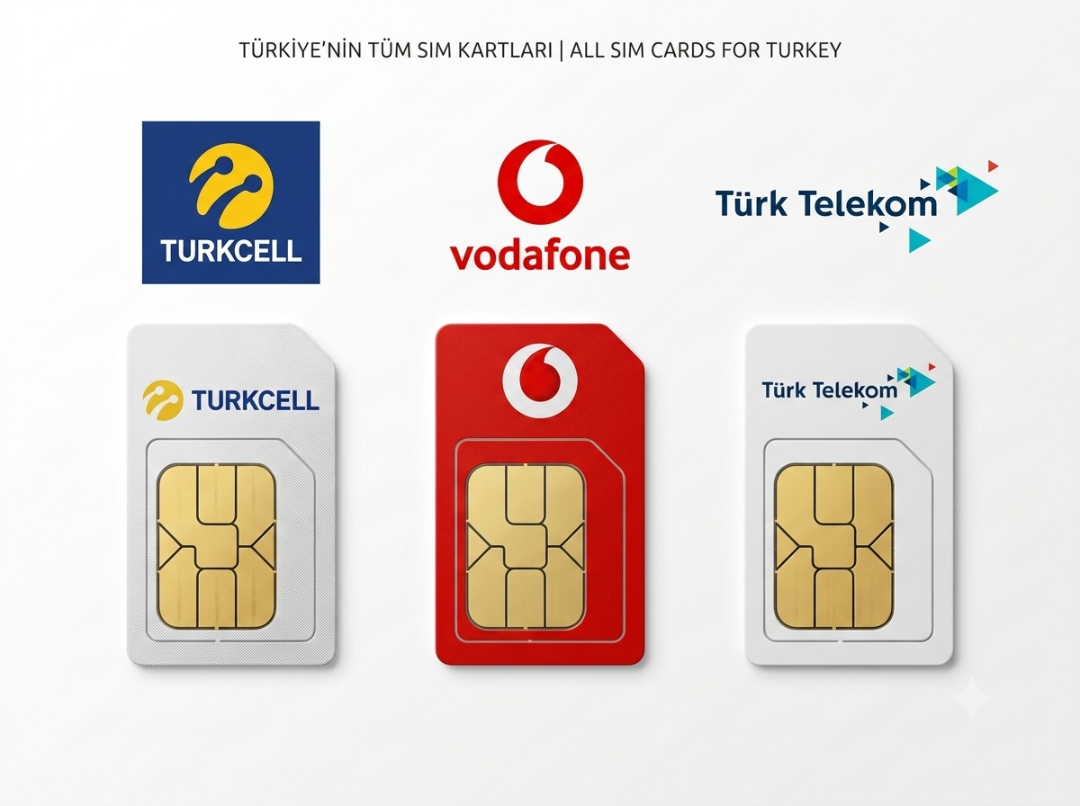
Why do most tourists still get a local SIM? Because roaming with your home operator in Turkey is almost always ruinously expensive, while a local card gives you a Turkish number (sometimes needed for sign-ups and deliveries) and a stable connection across the country. Turkey has three major operators — Turkcell, Türk Telekom and Vodafone — plus the budget sub-brand Bimcell. One universal tip that will save you thousands of lira: don't buy a SIM right at the airport if you can wait until you're in the city. Prices at the counters in the arrivals area are usually 50–70% higher than in a regular operator store in the centre. The same package that costs around 1200–1300 lira in the city can easily become 1800–2500 at the airport. And one more hard-and-fast rule: pay only in Turkish lira. Any price quoted in dollars or euros at an airport counter is an extra mark-up. Either way, you'll need your passport to buy one: SIM registration is mandatory for foreigners, and it's done right in the store in a couple of minutes. It's best to buy from the operators' official branded stores rather than random kiosks — prices there are transparent, and they'll help you if something doesn't activate.
Turkcell
The country's largest operator and the best choice for coverage, especially if you're planning to travel beyond Istanbul — to Cappadocia, the Black Sea or the eastern regions. Where other networks drop out, Turkcell usually still holds a signal. Speed and stability are excellent too. Turkcell has a single tourist plan — the Tourist Welcome Pack: 20 GB of internet, 200 minutes of calls to any destination and unlimited WhatsApp, valid for 28 days. The official recommended price is around 1800 lira (roughly 45–50 dollars), but in the branded stores in the city the real price starts closer to 1300 lira. You need your passport to buy it. Who it suits: those who value maximum coverage and plan to travel around the country, not just Istanbul. You'll pay a little extra for the reliability.
Türk Telekom
The second-largest operator. In big cities — Istanbul, Ankara, Izmir — the connection is solid, but in rural areas and remote villages the signal weakens more noticeably than Turkcell's. On the other hand, Türk Telekom often turns out to be the best value of the "big three". The range of Welcome tourist packages is flexible and tied to validity periods: for example, the 10 GB package lasts 7 days, the 25 and 50 GB packages 28 days, and the 75 GB package 15 days. There are also large packages of up to 100 GB. Prices at the airport counters started at about 1100 lira for a small package, but many of them are valid for only a week — worth checking in advance. You need your passport to buy one, and an important detail: with Türk Telekom, some packages may come with mandatory fees and taxes on top, so always ask for the final "all-inclusive" price.
Vodafone Turkey
The country's third operator by coverage and subscribers. In cities and tourist areas you get fast, reliable internet, with 5G and eSIM support. In the countryside its coverage lags behind Turkcell's, but for those who stick to cities and resorts, Vodafone often offers a good balance. The tourist Welcome to Turkey Package usually includes a generous 20 GB of internet, 750 minutes and up to 1000 SMS for 28 days. In terms of minutes, it's the best-value package of the three. The price is usually slightly higher than Türk Telekom's and depends heavily on where you buy it — the airport counters are the most expensive. You need your passport to buy it.
Bimcell — The Cheapest Option
Bimcell is a sub-brand running on the Turkcell network and sold mainly through the BİM discount store chain all over Turkey. It uses the same infrastructure as Turkcell but costs noticeably less, because it's sold without expensive in-store service. You can buy a card at BİM stores, of which there are thousands across the country.
eSIM in Turkey
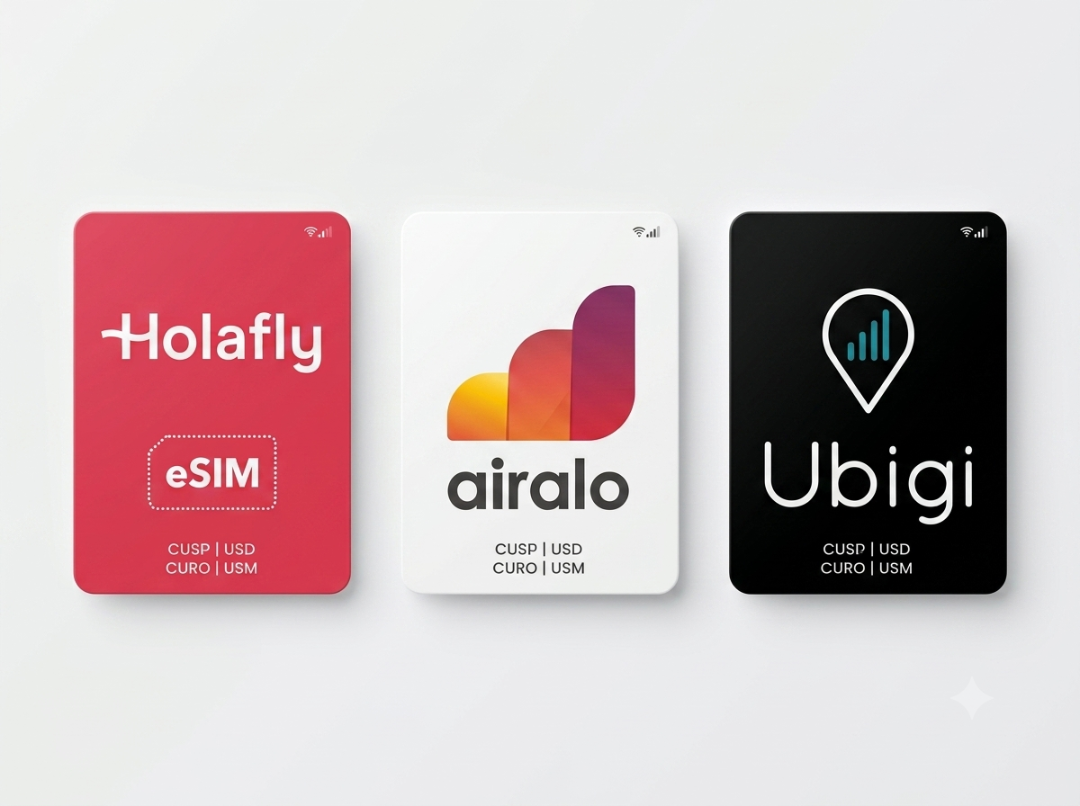
An eSIM is a "digital" SIM card built into your phone: there's no plastic to insert — you just scan a QR code and mobile internet is up and running in a couple of minutes. For tourists the advantages are obvious: no need to look for a store, queue at an airport counter, show your passport or overpay for a "tourist" plastic SIM. You can buy an eSIM while still at home, before your flight, and land in Istanbul with internet already working. Almost all modern smartphones support eSIM: iPhone XS and newer, Google Pixel 3 and newer, Samsung Galaxy flagships (S20 and newer), as well as many mid-range models. Checking compatibility is easy — your phone's settings usually have an "Add eSIM" or "Add cellular plan" option, or you can dial *#06# and see whether there's an EID line. Important: the phone must be unlocked for any operator. A critically important point specific to Turkey. Since mid-2025, the Turkish regulator BTK has been blocking the websites and apps of foreign eSIM services inside the country. In practice this means you need to buy and install your eSIM BEFORE arriving in Turkey, while you're still at home and have internet. An installed eSIM will work, but topping up a package or activating a new one once you're there may not be possible. So get an eSIM with plenty of data to spare.
⚫ Airalo — the best known, with fixed packages: about 3.5 dollars for 1 GB for 7 days, around 18 dollars for 10 GB and about 26 dollars for 20 GB for 30 days. No Turkish number, data only. Excellent coverage and a simple
⚫ Holafly — specialises in unlimited packages: about 20 dollars for 5 days, 34 dollars for 10 days, around 75 dollars for 30 days. Hotspot (internet sharing) is available, but the "unlimited" plans come with a fair-use policy — after a few gigabytes a day, speed may be throttled. More expensive than competitors, worth it for those who stream a lot.
⚫ Ubigi, Nomad, Sim Local, Saily — solid alternatives. Nomad and Ubigi offer good-value fixed packages; Sim Local stands out with one of the most generous fair-use policies among the "unlimited" plans. They all activate quickly — the QR code arrives by email right after payment, installation takes minutes, and there's no need to visit a store.
Getting connected in Turkey takes five minutes of preparation — the key is to make an informed choice rather than grabbing the first counter at the airport. And once your internet is up and running, all of Istanbul opens up to you: routes, audio guides and tips on what to see and how to get there, always at hand on gezdir.me.
Mobile internet is a topic where operators' prices and terms change especially fast, and rates sometimes depend on the specific point of sale. Before buying, check the current packages on the official website