Taxis in Istanbul: How to Use Them, What Rules to Know and How Not to Get Ripped Off
By Мақсат Қыпшақ ·
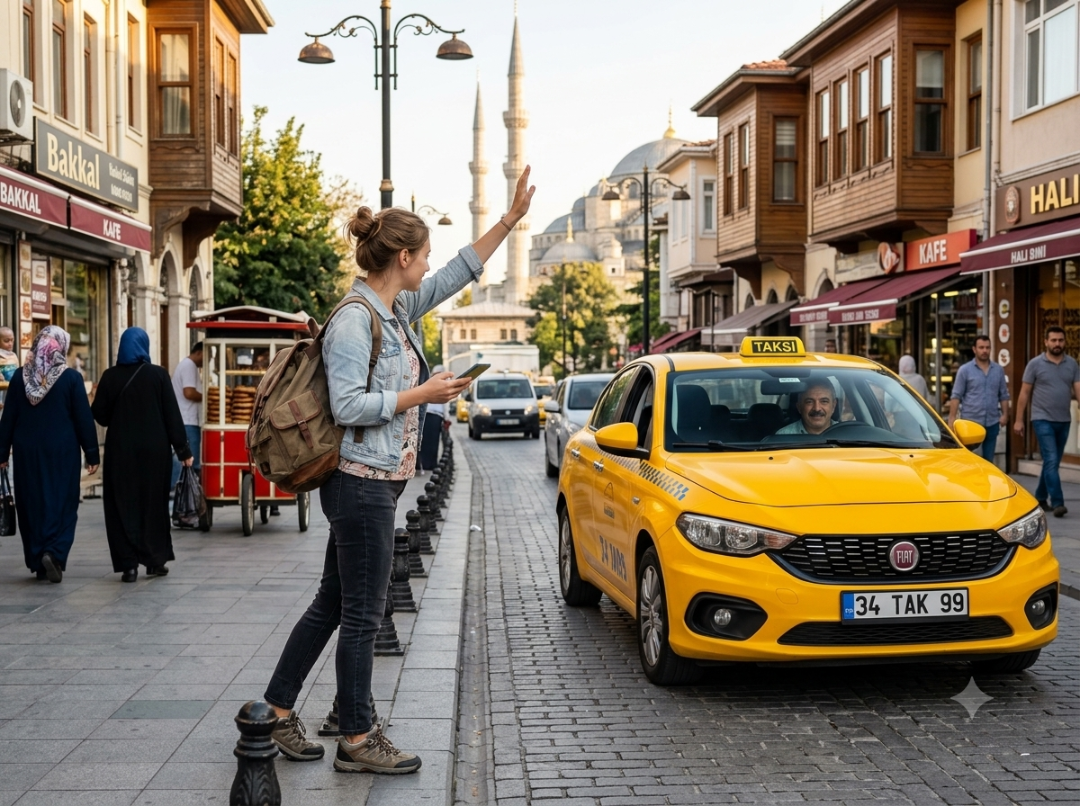
The plane lands, you clear passport control, grab your suitcase — and there you are in the arrivals hall of Istanbul Airport, surrounded by a hum in ten languages and the smell of fresh simit from the nearest bakery. Beyond the glass doors is a line of yellow cars, voices calling out to you, someone waving a sign with a name that isn't yours. Almost every tourist has the same first thought: who can you actually trust here, how much should you pay, and how do you avoid paying three times too much for fifteen minutes in evening traffic? Let's take it step by step — and in just a few paragraphs you'll be getting into an Istanbul taxi with the same confidence as a local.
How the city's taxi system works
Unlike many tourist capitals, Istanbul's taxis are not a free-for-all market but a strictly regulated city system. It is run by the municipality, and you can't simply join it by buying a used sedan. Every car allowed to carry paying passengers must have a commercial registration and a licence, and every driver must pass official certification. That is why there are almost no "pirate" taxis in the classic sense in Istanbul: the risk of losing the right to work is too great, and the system itself is designed so that it is easy to check at a glance, even if you don't speak Turkish.
Who becomes a taxi driver, and how
Having a driving licence is not enough to get behind the wheel of an Istanbul taxi. A driver has to put together a whole set of documents: a health certificate, a psychotechnical assessment of fitness to drive, a clean criminal record certificate and a professional training certificate — and only then does the city administration issue the so-called "driver's card". Age matters too: drivers who are too young or too old are not allowed into the profession. All of this works as a filter: behind the wheel of an Istanbul taxi is someone who has been vetted, not a random stranger off the street.
Taxi Plakası — the most expensive plate in the city
But a driver's permit alone is not enough — the car itself also needs a licence, the so-called taksi plakası, or taxi plate. And this is where a truly Istanbul story begins. The number of plates in the city is strictly limited: they were issued over decades and almost no new ones appear, while demand grows along with this metropolis of fifteen million. A plate long ago turned from a simple permit into a financial asset: it is bought, leased to drivers and passed down as an inheritance. In summer 2026, one such plate costs around twelve million lira on the Istanbul exchange — more than an apartment in a residential district. So an ordinary yellow car turns out to be part of a real exchange game.
In summer 2026, one such plate costs around twelve million lira on the Istanbul exchange — more than an apartment in a residential district.
Yellow, turquoise or black — which taxi to choose
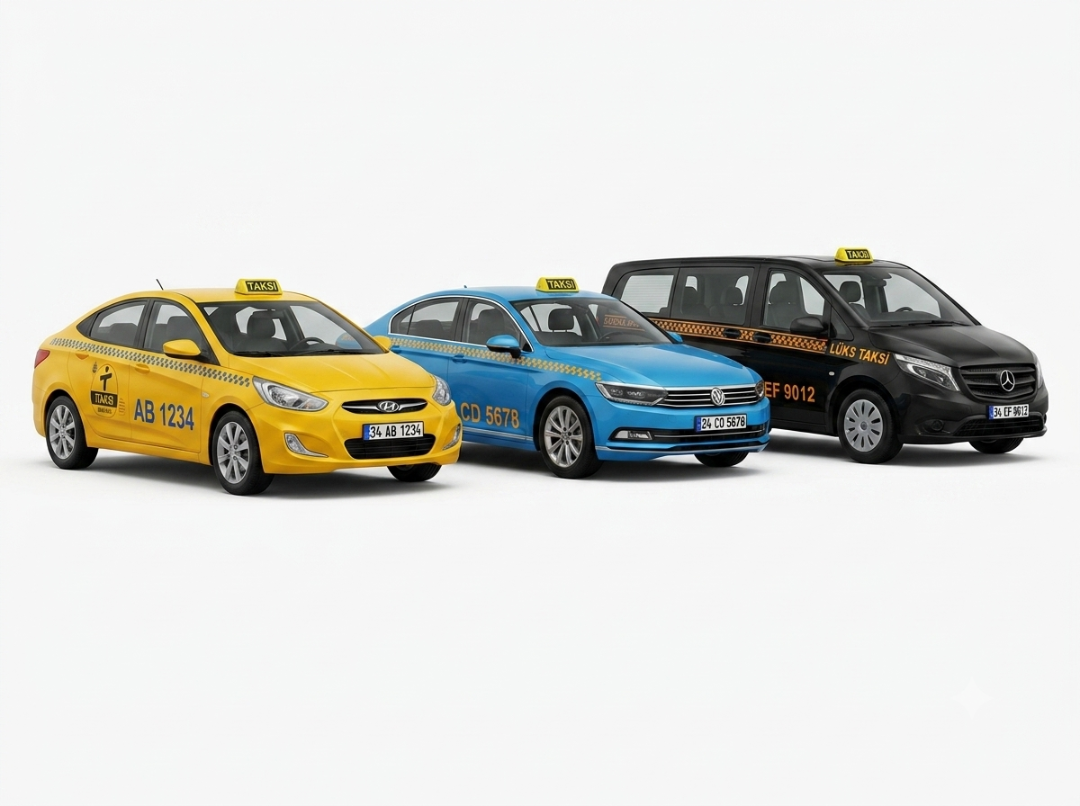
Walking around the city, you'll notice that Istanbul's taxis are not all the same colour. The classic and most common option is the yellow sedan, affordable and everywhere — it's the easiest one to hail on the street. Turquoise cars are a slightly higher segment: they are often booked for airport transfers, and the interior is usually newer and roomier. Black taxis are a premium format, with a higher fare and more attentive service, closer to a private transfer. For large groups or families with luggage there are also spacious VIP minivans. The difference in colour isn't just about looks — it tells you directly which fare will run on the meter.
How much a ride really costs
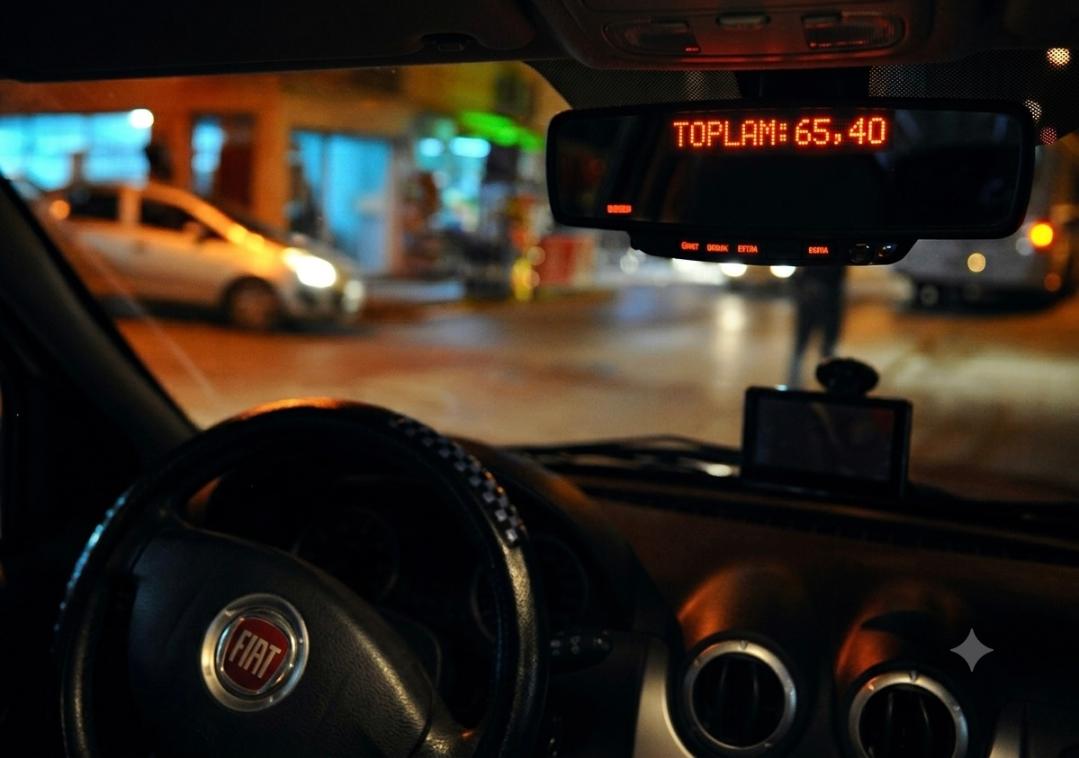
The fare in Istanbul is made up of two parts: the flag-down fee and a charge for every kilometre travelled, plus a minimum fare below which the meter simply won't let you pay less. As of 2026, for a regular yellow taxi the flag-down fee is 65,40 ₺, each kilometre is 43,56 ₺, and the minimum fare (the so-called "indi-bindi", meaning "got in, got out") is 210 ₺, even if you only rode a couple of blocks. Turquoise taxis charge a little more — around 72–75 ₺ for the flag-down and 48–50 ₺ per kilometre, while black VIP taxis are noticeably more expensive, from 107 ₺ for the flag-down and roughly 71–74 ₺ per kilometre. If the car is stuck in traffic longer than usual, an hourly rate also kicks in — around 544 ₺ per hour, so a long traffic jam is reflected on the meter honestly, not as an attempt to cheat you. One important myth is worth dispelling right away: there has been no separate "night" fare in Istanbul for a long time — the meter counts the same at noon as at three in the morning, and any driver who claims otherwise is simply inflating the price. Toll bridges and tunnels are a separate cost: if your route crosses one of the Bosphorus bridges (15 Temmuz Şehitler, FSM, Yavuz Sultan Selim) or the Eurasia Tunnel, that amount will naturally be added to the meter, and that is normal, not a scam. A ride from the airport to the centre — to Taksim or Sultanahmet — usually falls in the range of one and a half to two and a half thousand lira, but there is no fixed price: it is the meter and the traffic that decide.
Apps that save your nerves
If you don't want to rely on luck and explain the address with hand gestures, the best option is to book a car through an app. BiTaksi is the most popular local service with the largest number of drivers; Uber also works in Istanbul, it simply sends the same licensed yellow taxis. They all show the estimated fare in advance, charge your card automatically and keep a record of the trip — which also means proof if something goes wrong. For your first ride in an unfamiliar city, this is probably the most stress-free option.
Common tricks worth knowing in advance
Scams are not common, but a tourist is a tourist — and some drivers take advantage of that. The most common scheme is to "forget" to turn on the meter and name a guessed amount at the end of the ride, usually several times too high. The second is to claim the card terminal is broken and insist on cash payment without a receipt, even though accepting cards is required by law. The third is to deliberately take a longer route, especially if it's clear the passenger doesn't know their way around the city. And, as already mentioned, the "night surcharge" story is for those who don't know that no such fare exists in Istanbul.
What to do if a driver behaves dishonestly
If a driver refuses to go to the address you gave, demands more money than the meter shows, or tries to turn onto a "faster" route without explanation — there's no need to argue or worry. Just remember or photograph the licence number on the windscreen and the car's number plate, calmly get out and catch another car: there are always plenty of free taxis in Istanbul. A ride through an app removes most of these risks on its own, since the route and the price are visible in advance and the trip history is saved. In a dispute, that record is your best argument.
Where to turn if you do get scammed
If the incident has already happened, rather than just brewing, Istanbul has a complaints system that genuinely works — few tourists simply know about it. The main channel is the municipal service "Beyaz Masa" ("White Desk"), which takes requests from residents and visitors on 153: the call is free, the line works around the clock, and you can also file a complaint through the Beyaz Masa mobile app, through İBB's social media, or in person at one of the service points around the city. “ WhatsApp : 0552 153 00 34” Separately, there is a line run by the Istanbul Chamber of Taxi Drivers itself (İstanbul Taksiciler Esnaf Odası) — 444 15 23, which also accepts complaints about specific drivers. For a complaint you'll need the licence number from the windscreen, the car's registration number, and the time and place of the ride — and if you had your phone at hand, a short video or photo of the meter showing the reading will be the best evidence. Confirmed offenders can be temporarily suspended from work, so a complaint is not a formality but a tool that really changes something.
A few simple habits before you get in
Before getting into the car, make sure the licence number is visible on it and that the meter inside is working and switches on as soon as the ride begins. It's easier to show the address on your phone screen than to say it out loud — this saves time and helps avoid misunderstandings. It's important to remember that a taxi driver has no right to refuse you a ride, even if the distance is short. In practice, some taxi drivers really are reluctant to take passengers on short routes, but this is a violation of the rules. If possible, it's better to book a car through an app rather than hail one on the street, especially during your first days in Istanbul. If you want not just to get from point A to point B but to spend a day exploring Istanbul at a comfortable pace, you can book a private full-day transfer in the gezdir.me app. The driver will follow the route you choose, and the ready-made routes, audio guides and useful tips in the app will help you see the city much more deeply — not as an ordinary tourist, but through the eyes of people who truly know Istanbul. It's a chance not just to move around the city, but to turn every ride into part of your journey.